how it works.
One idea sits underneath everything we do: we never ask your child for the scary thing.
we start where your child's at.
and we don't stay there.
Every food sits somewhere on a scale of one to ten. A ten is the one you can't picture your child ever doing — and it doesn't much matter why it's a ten. It might be fear. It might be the feel of it in the mouth, or the smell, or a bad memory, or simply never having done it before.
We don't start at ten. We find something your child can already do at a one, and we do that until it's boring. Then two. Each step is small enough that your child barely notices the ground has moved.
The early steps aren't eating at all.
Touching the food
Smelling it
Touching it to closed lips
Licking it
A speck
A dab
A quarter
A half
Three quarters
A full bite
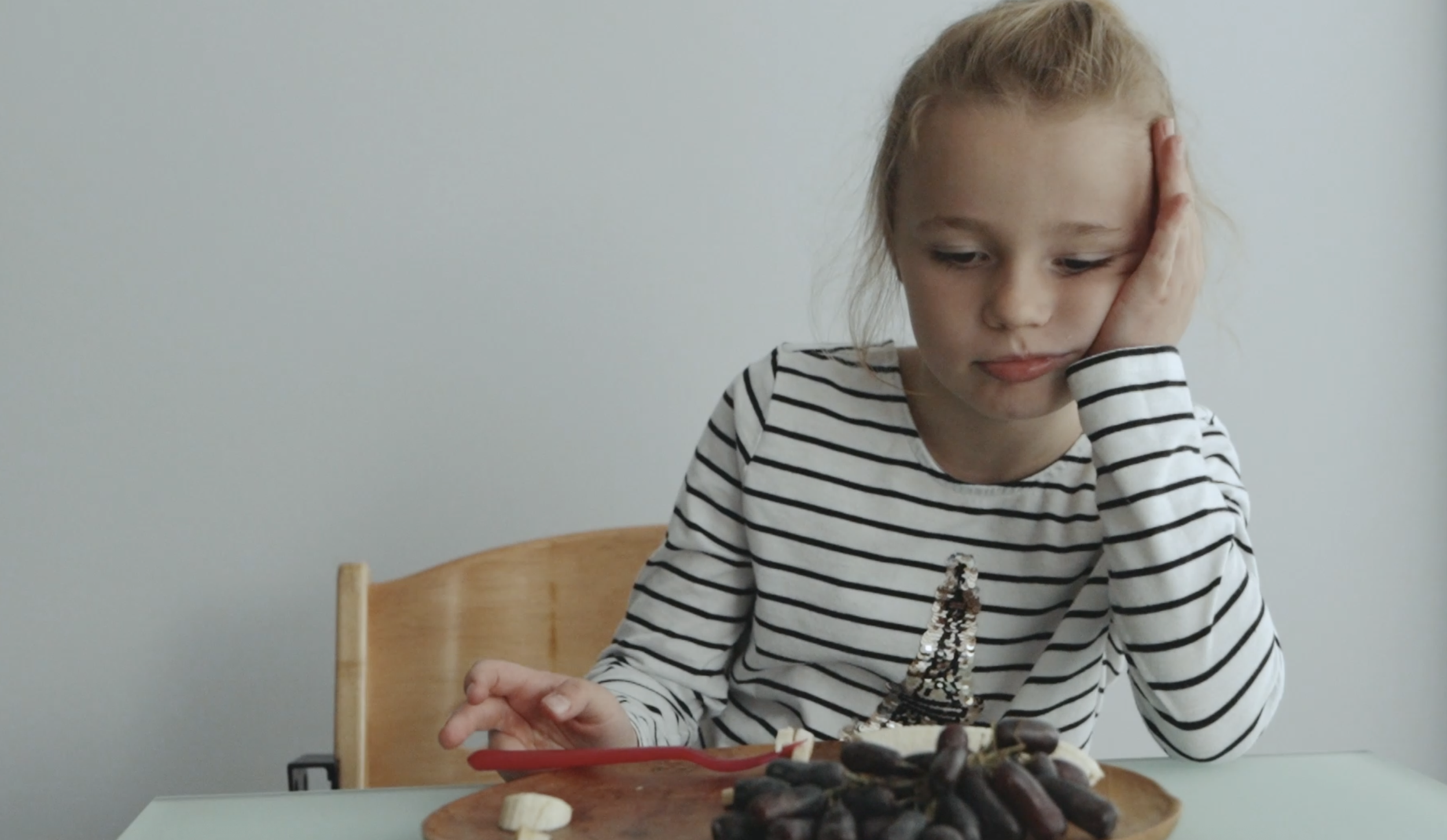
A child who won't go near broccoli might spend three sessions just touching broccoli. That's a real result, and we record it as one.
Children whose difficulty is physical rather than sensory — trouble chewing, or moving food around the mouth — work a different and longer version of the same idea, built around the mechanics rather than the fear.

how we know it's working
Every attempt is recorded. Not a note at the end of the session saying it went well — every single presentation of every food, and what your child did.
A step counts as learned when your child manages it twenty-two times, succeeding at least eighty per cent of the time, across different days. Not once on a good day.
That's the difference between progress that holds and progress that disappears the first time your child is tired, or unwell, or eating at someone else's table.
You see the same data we do, in a progress report written to be read by you rather than by another clinician.
what we're actually building
It isn't really a list of foods. It's a child who has done a hard thing, then a harder one, and has the record to prove it. That's the part that keeps going after our last session. Most of the work happens between sessions, and you'll be in the room learning it — more on what that looks like.
-
Sessions are an hour, and they don't happen at a mealtime. That surprises most families. We're not trying to fix dinner tonight — we're teaching a skill, and a skill is easier to learn when nobody's hungry and nothing else is riding on it.
Your child works on a small number of foods at once, each at its own step on the ladder. One food might be at a full bite while another is still at smelling, and that's normal — the ladder belongs to the food, not to the child.
Every presentation gets recorded as it happens, on the spot. That's what makes the slow thing visible later.
-
We don't hide vegetables in a smoothie and call it progress. A child who doesn't know they ate it hasn't learned anything.
We don't pressure a child into one more bite. A child who is frightened of food does not learn to eat by being made to, and pressure is the first thing we take off the table.
And we don't tell you they'll eat when they're hungry enough. For some children that simply isn't true, and acting as though it is can be unsafe.
Tell us what mealtimes look like at your house.
